






SKU : COMP3006
Compressive Dental Implant, One-Piece with Bendable Neck
Regular price $80.00 USD
 Download IFU (PDF)
Select ø diameter × length
Click cells to add to your order
Complete the case

510(k) Cleared & CE & ISO 13485 Certified
Meets U.S. & international standards
Precision Fit
Engineered for major implant systems
Fast Shipping
Reliable delivery & easy re-ordering

Ask about Compressive Dental Implant, One-Piece with Bendable Neck
Product Details
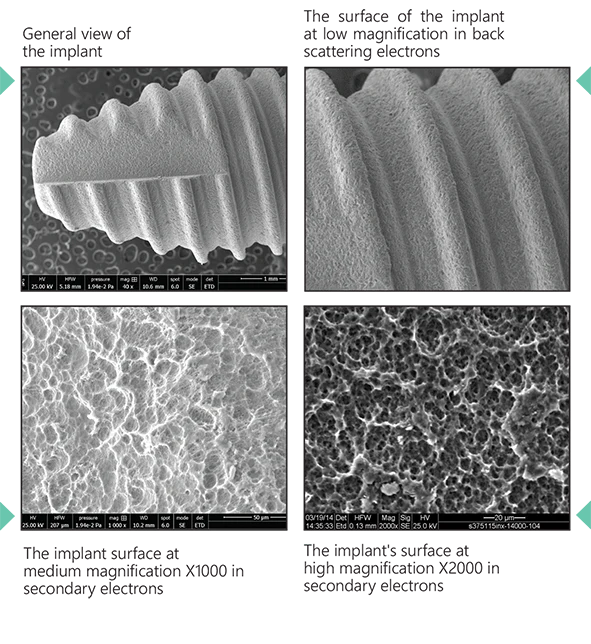
The Surcam Compressive Implant is a one-piece, immediate-load oriented design for cases with limited ridge width and the need for conservative preparation. Its compressive, bone-condensing macrogeometry minimizes drilling and gently compacts cancellous bone to enhance primary stability. A bendable neck (up to 30°) allows chairside correction of angulation for restorative alignment. The aluminum-free SLA surface (dry alumina blasting + double acid etch) supports clean, predictable osseointegration. Designed for straightforward workflows, it helps clinicians achieve secure, long-lasting restorations with simplified instrumentation.
Connection: One-piece (no internal connection); restore per your prosthetic protocol.
Bendable Neck: Correcting Angulation Chairside
A one-piece implant has no separate abutment, so an angled abutment cannot correct the prosthetic axis. The Surcam compressive implant solves this with a bendable neck: after placement, the neck can be bent up to 30° with the recommended bending tools to bring the restoration into line with the adjacent teeth or the other implants in a bridge.
- Plan the final axis before bending and make one controlled bend.
- Avoid repeated bending, which can weaken the neck.
- Stay within the limits stated in the IFU.
For when to choose a one-piece compressive implant over a two-piece system, see the compressive one-piece implant guide.
FAQs
Is this implant suitable for narrow ridges?
Yes. The compressive geometry is intended for conservative osteotomies and ridge narrowing, enhancing primary stability via bone condensation. Final indication is case-dependent per IFU.
Can I immediately load this one-piece implant?
When criteria are met. Proceed with immediate/early loading only if primary stability (e.g., torque/ISQ) and occlusal control satisfy the IFU.
How much can I bend the neck and how?
Up to 30° using the recommended bending tools. Avoid repeated bends and do not exceed limits stated in the IFU.
What prosthetic workflow is used for one-piece implants?
One-piece designs are typically finished as prep-and-cement restorations (or other indicated prostheses). Follow your restorative protocol and cementation best practices.
What drilling protocol should I follow?
Use a minimal/under-preparation sequence to promote bone condensation. Follow the manufacturer’s IFU for speeds, irrigation, and any tapping; do not exceed torque limits.