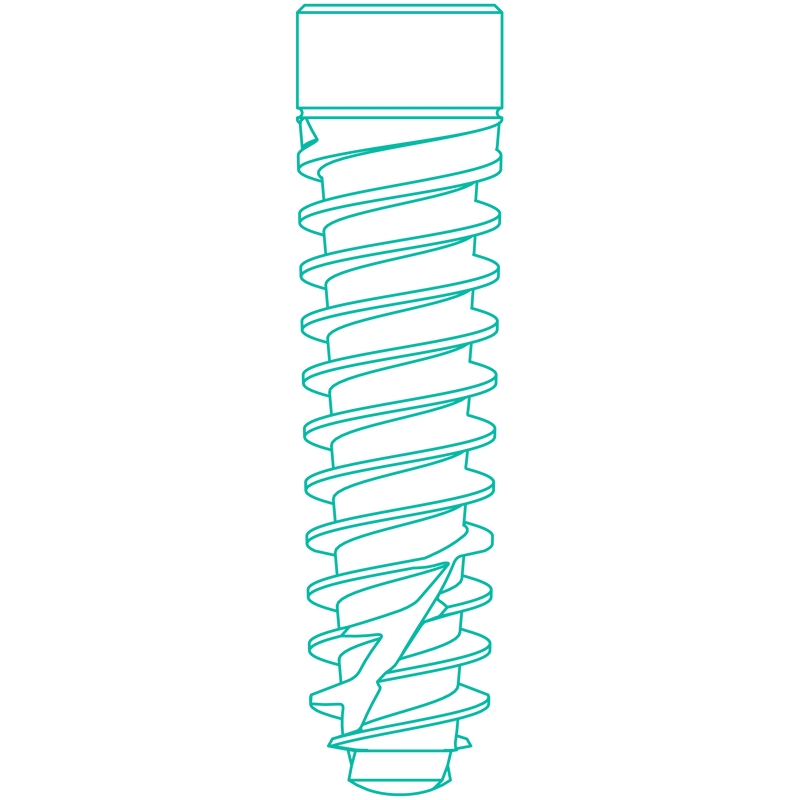
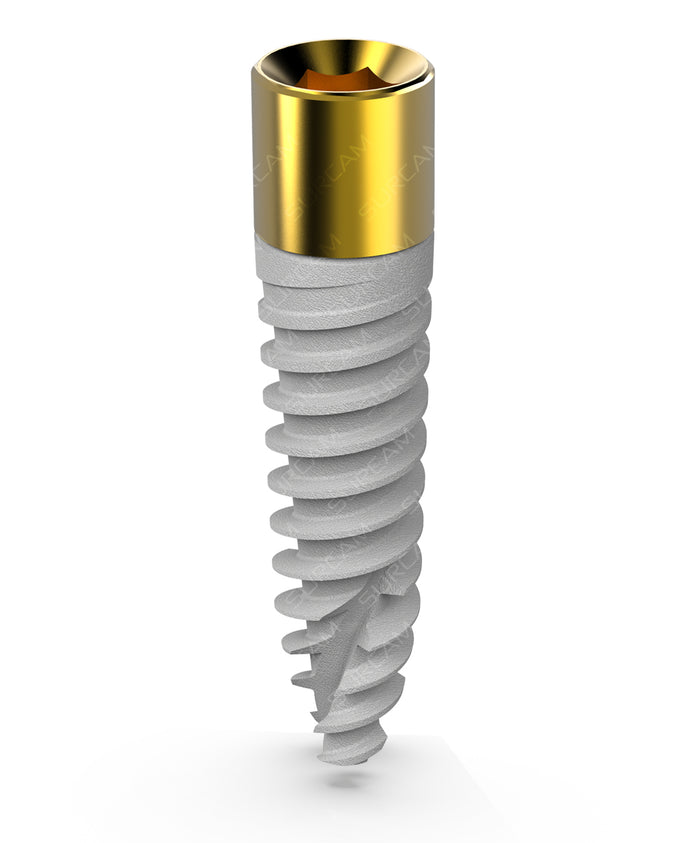
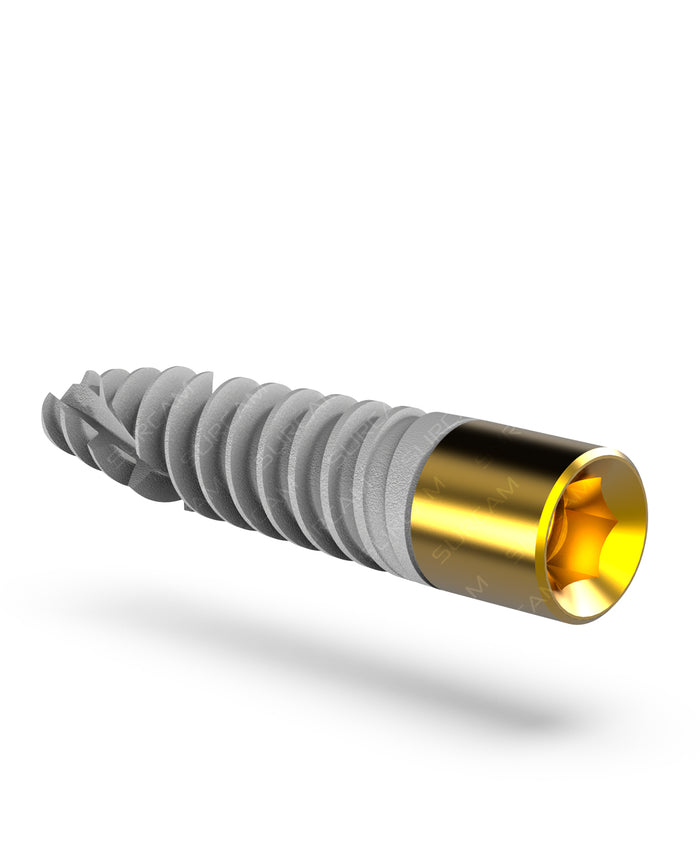

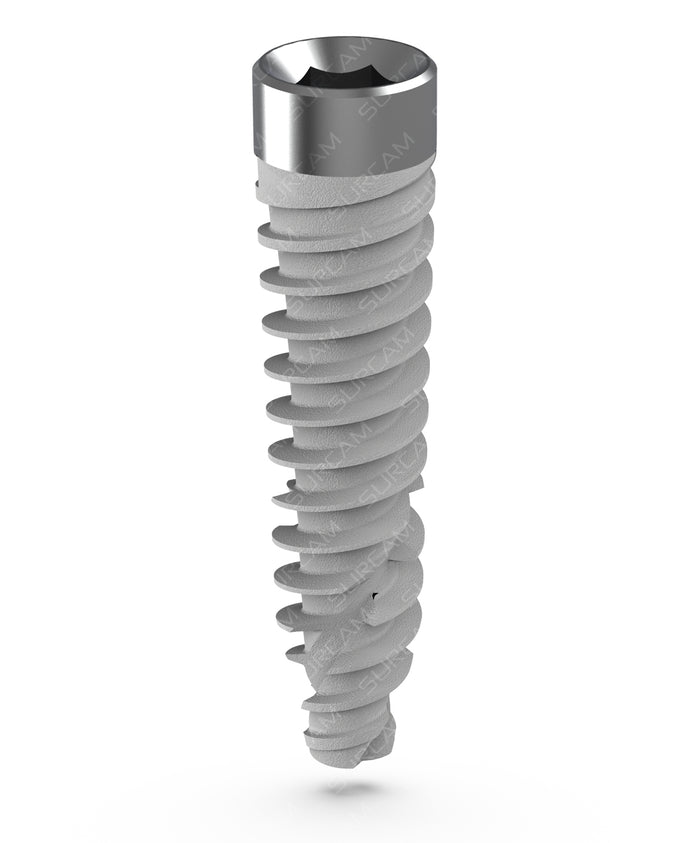

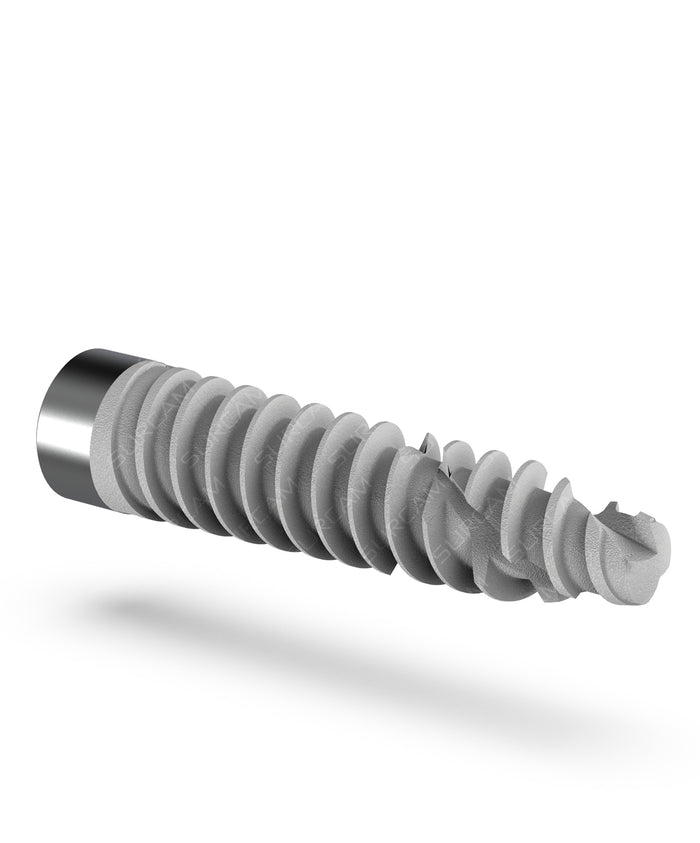
Surcam pterygoid implant specifications
- Diameter: Ø4.2 mm
- Lengths: 16, 18, 20, 22, 25 and 28 mm (the 4 mm TiN neck version starts at 18 mm)
- Connection: internal hex 2.43 mm
- Material and surface: Ti-6Al-4V ELI (Grade 5 ELI titanium) with an SLA surface (sandblasted and double acid-etched)
- Design: conical core with coarse macro-threads for primary purchase along the pterygoid pathway, plus an anchoring apex for directional control
2 mm neck or 4 mm TiN neck?
- Pterygoid Implant, 2 mm smooth neck: a shorter smooth collar that supports soft-tissue management and hygiene around the margin.
- Pterygoid Implant, 4 mm TiN-coated neck: a tissue-level, titanium-nitride-coated collar with a smooth, durable surface. Its visual contrast helps with margin control in the posterior maxilla.
When pterygoid implants are used
Pterygoid implants anchor in the pterygoid plates of the sphenoid bone, through the maxillary tuberosity. They give distal support to full-arch and posterior restorations when an atrophic posterior maxilla cannot hold conventional implants without sinus augmentation. Final indication is case-dependent and requires CBCT planning and adherence to the IFU.
For anatomy, trajectory, case selection and complications, read our pterygoid implants clinical guide.
Restoring pterygoid implants
Because pterygoid implants are placed at a steep angle, they are usually restored with angled multi-unit abutments and splinted into a rigid full-arch framework. They are often combined with zygomatic implants in graftless full-arch plans. See Prof. Samer Sarouji's zygomatic and pterygoid case.