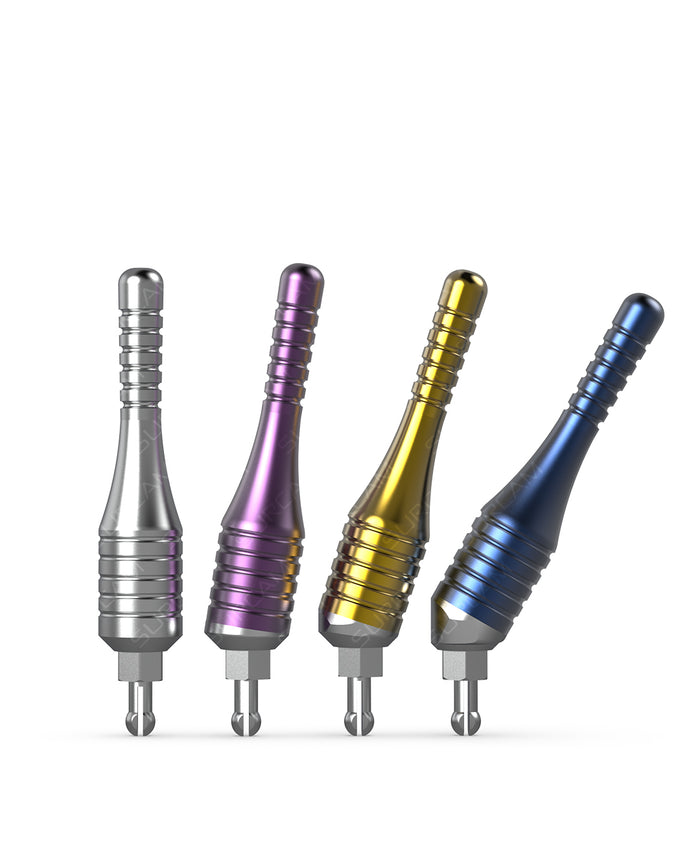
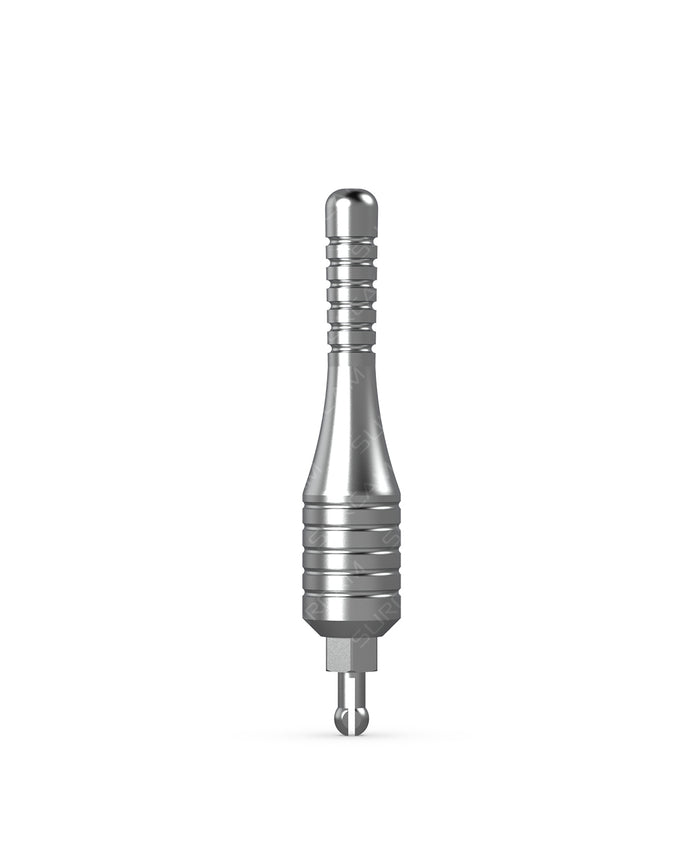
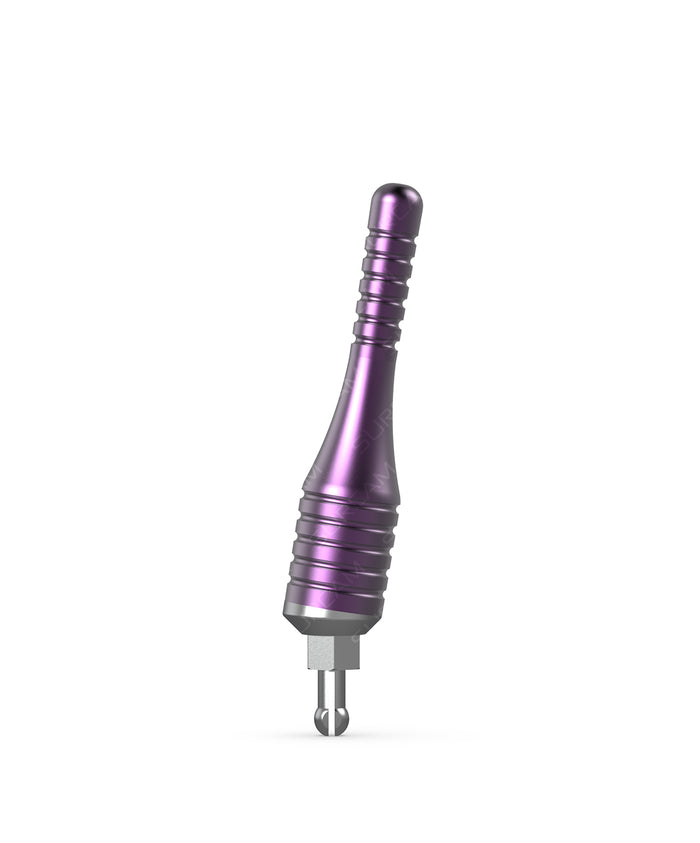
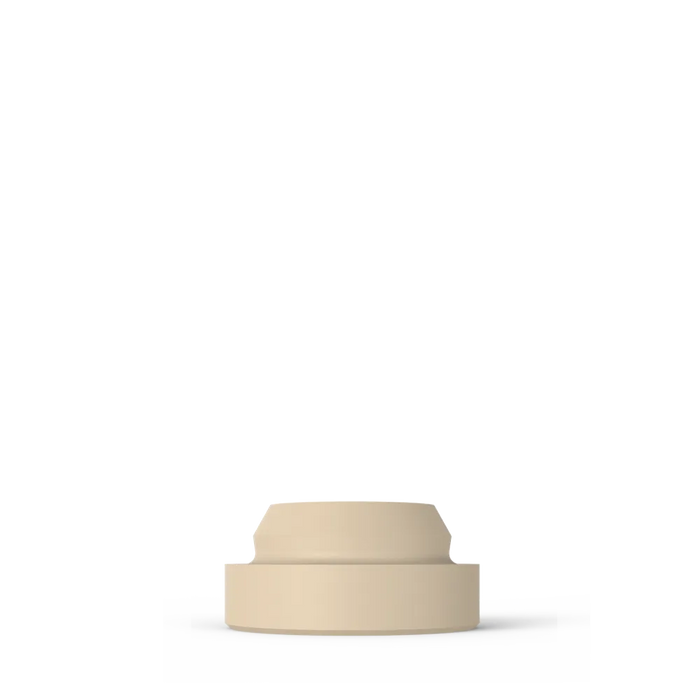
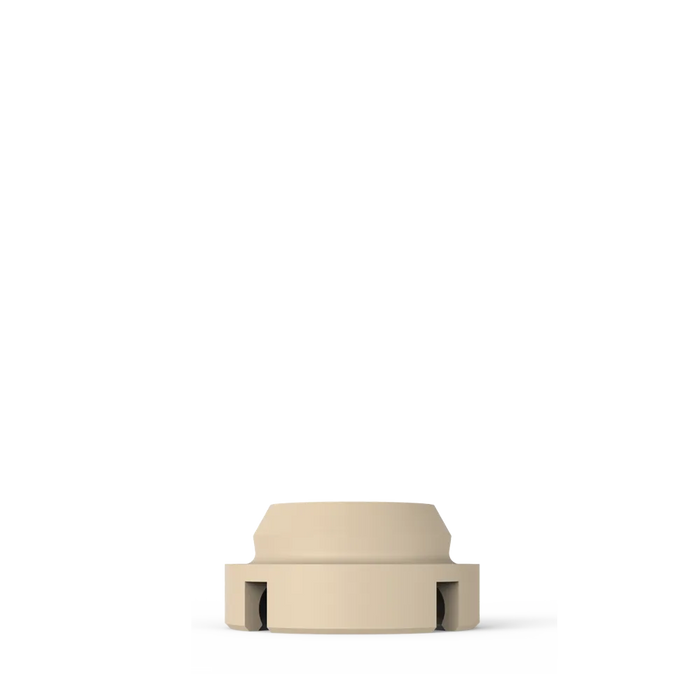
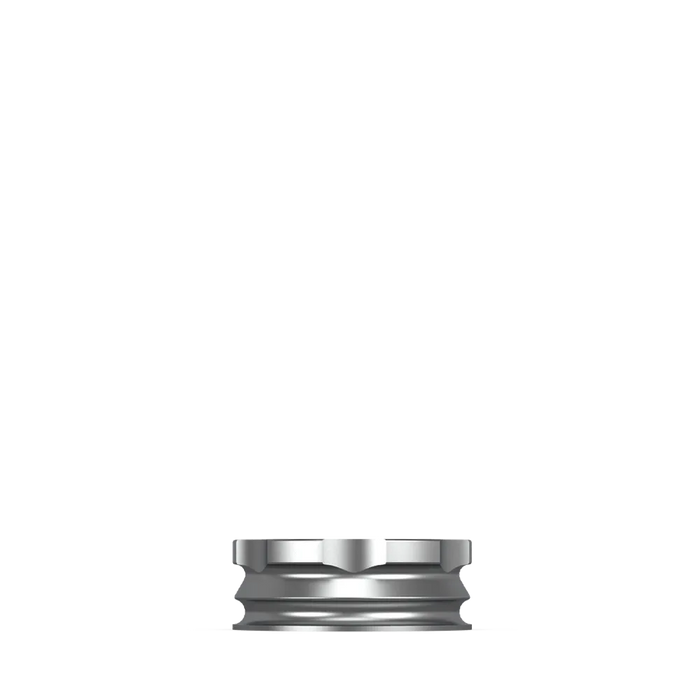
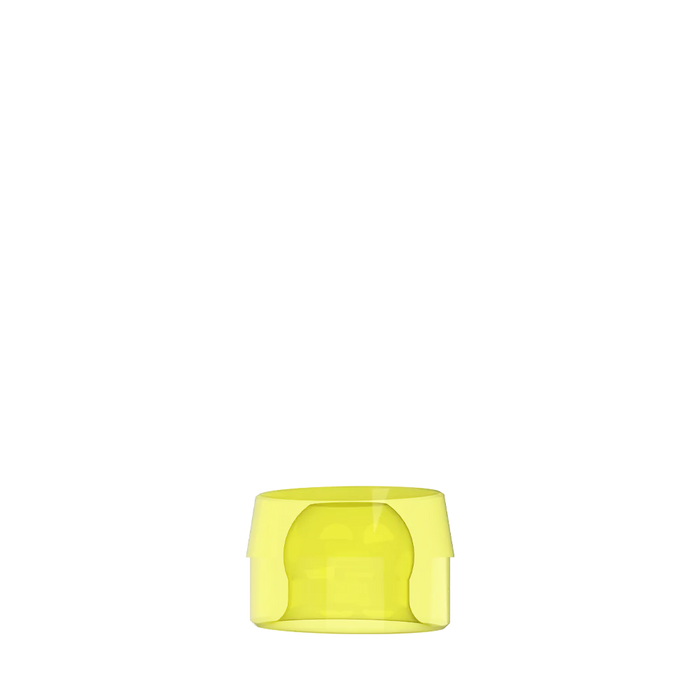
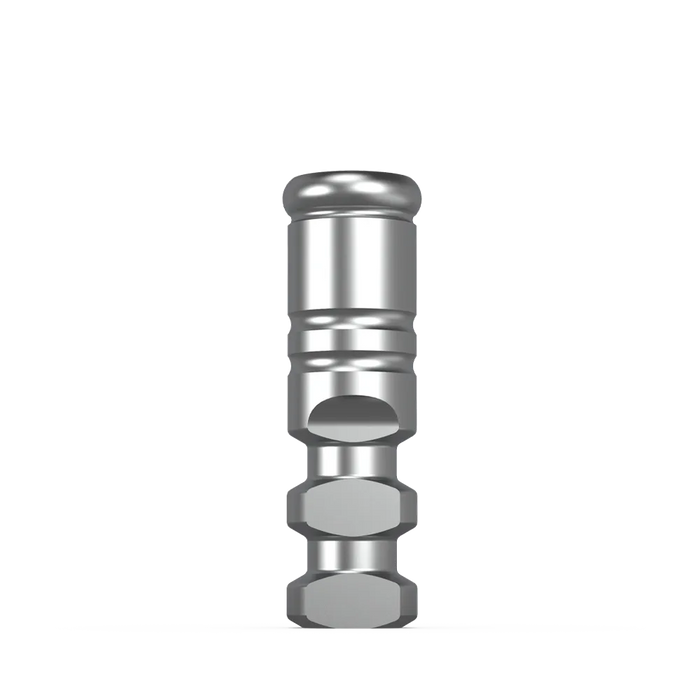
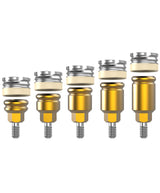
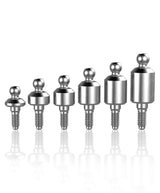
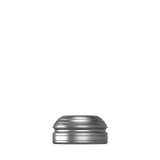
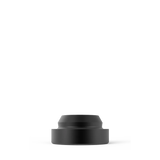
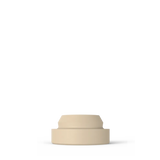
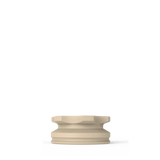
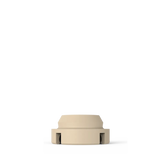
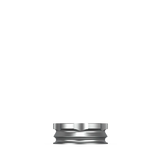
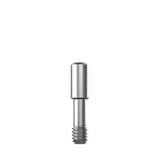
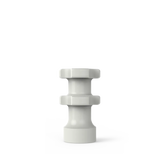
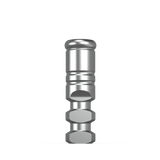
An implant overdenture is a removable denture that clicks onto two or more dental implants, so it stays in place when the patient eats and speaks but can still come out for cleaning. This collection holds every Surcam part for an implant-retained overdenture, from the abutment on the implant to the cap in the denture and the lab components in between.
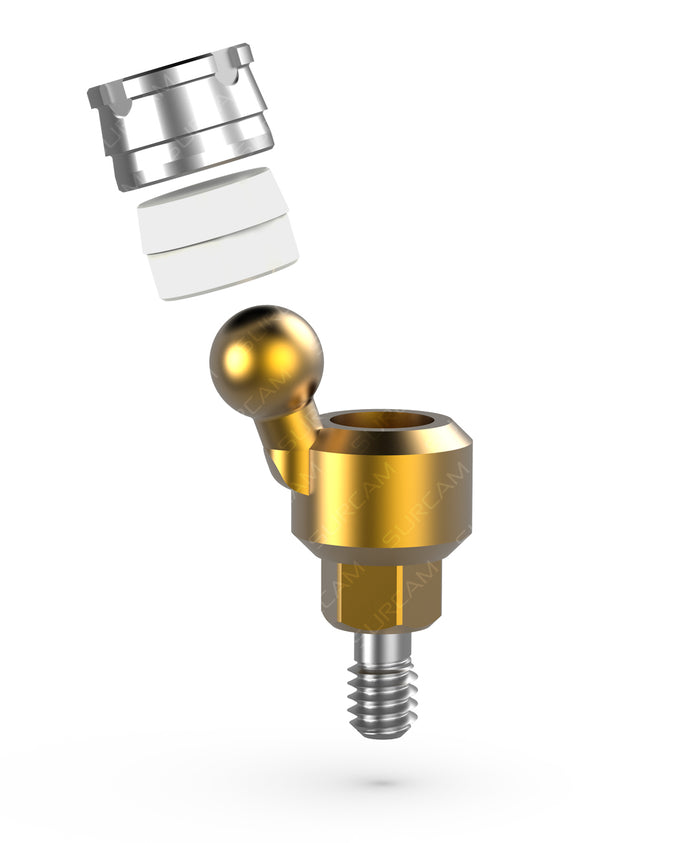
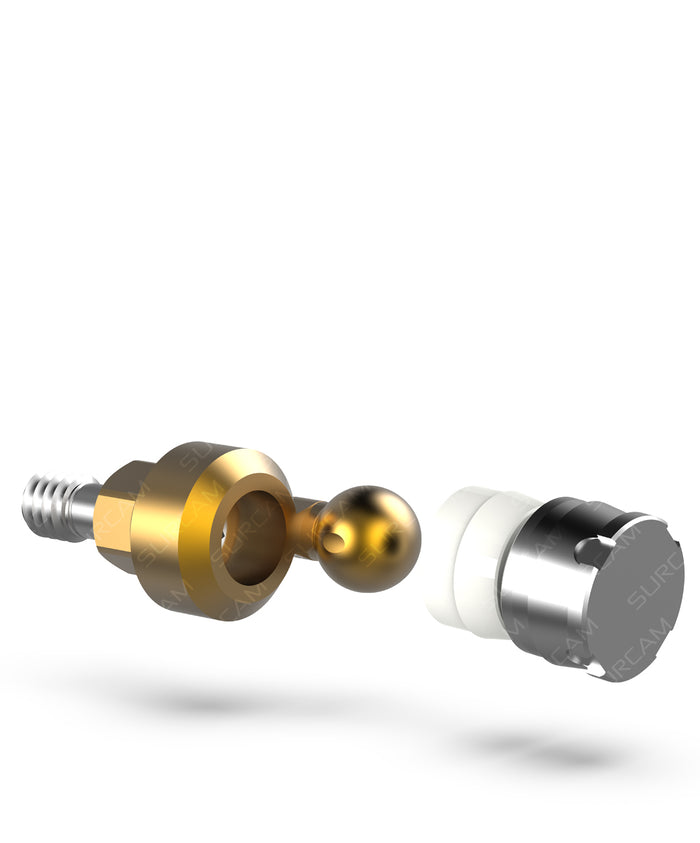
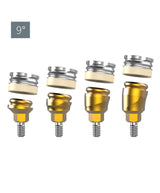
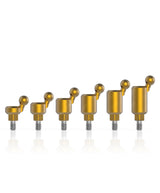
Surcam implant overdenture parts use two attachment systems with an internal hex connection: ball attachments and Wise-Lock, Surcam's own locator-style stud attachment, straight or angled up to 45° for divergent implants. Both come with replacement caps in several retention levels, stainless steel housings, and Wise-Lock impression copings, analogs and tools. The FAQ below compares the two systems.
Plan the case with internal hex implants. Take impressions with transfers and analogs, and seat abutments with the drivers in tools and wrenches. For a fixed full-arch alternative, see multi-unit abutments.
Understanding implant overdentures
An implant overdenture is a removable prosthesis that fits onto dental implants with ball or locator-style attachments. It keeps the hygiene access and removability of a denture while gaining much of the stability and chewing comfort of implant support.
How an implant overdenture works
Each implant receives an overdenture abutment that engages a matching housing and retention cap in the denture base. When seated, the connection holds the denture firmly during chewing, and the patient can still remove it for cleaning. Less denture movement means fewer sore spots than a conventional denture.
Ball attachments
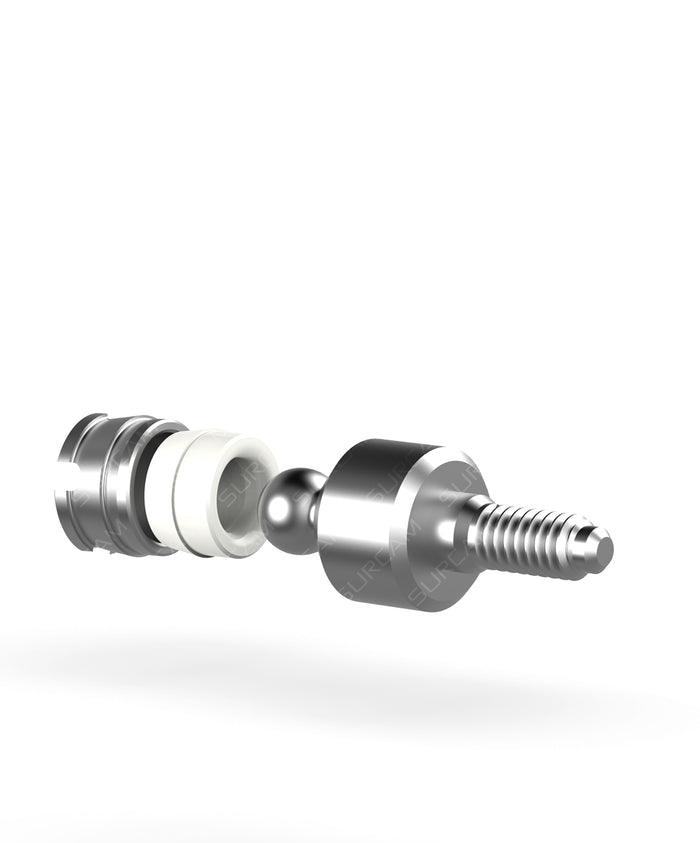
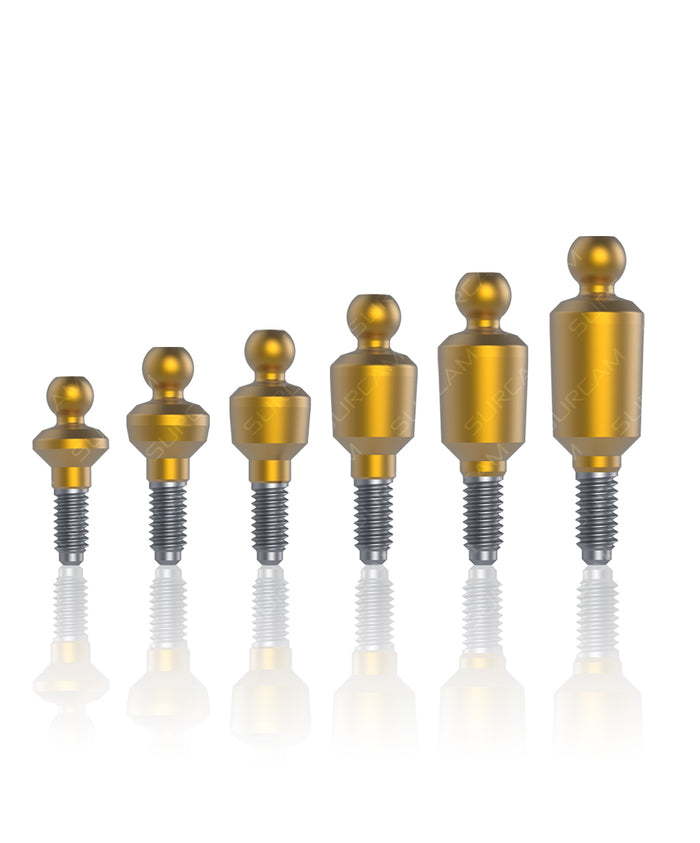
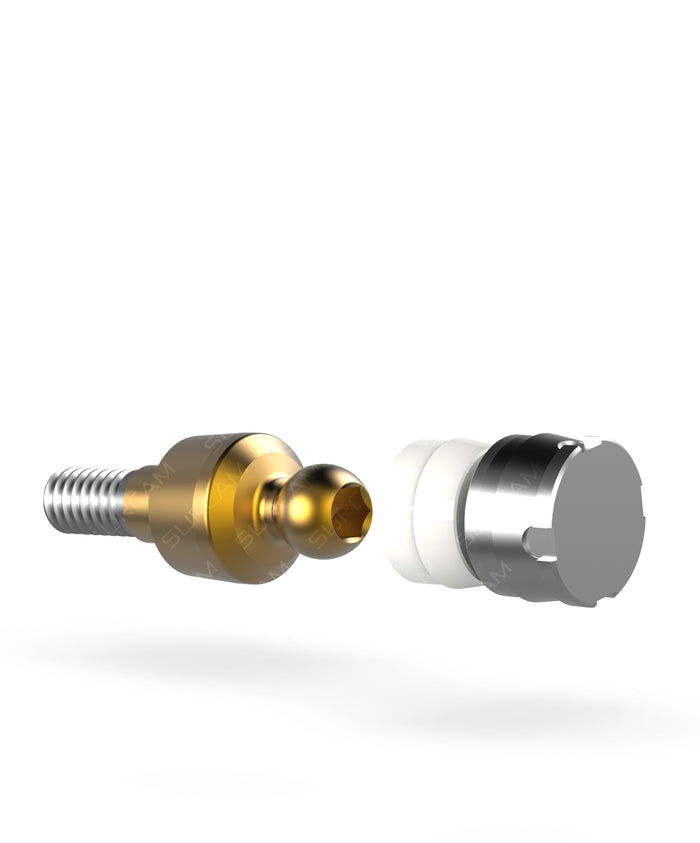
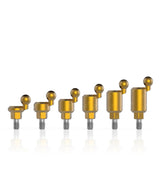
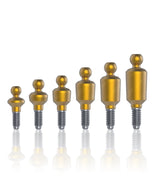
A ball-shaped abutment and an elastic cap that snaps over it. Simple to place and service, and widely used for two-implant lower overdentures. Surcam's multi-position offset version helps when implants are not parallel.
Locator-style attachments (Wise-Lock)
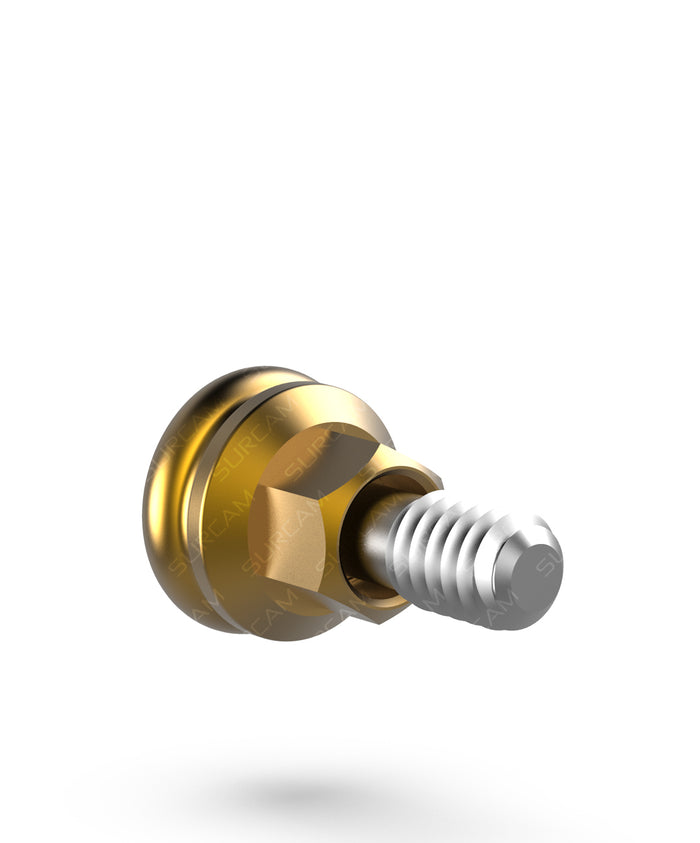
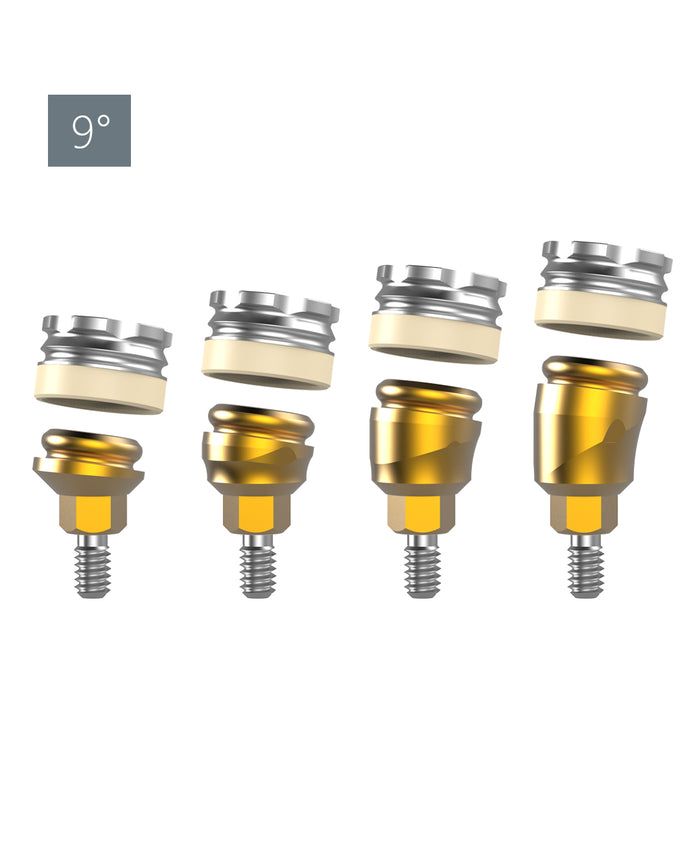
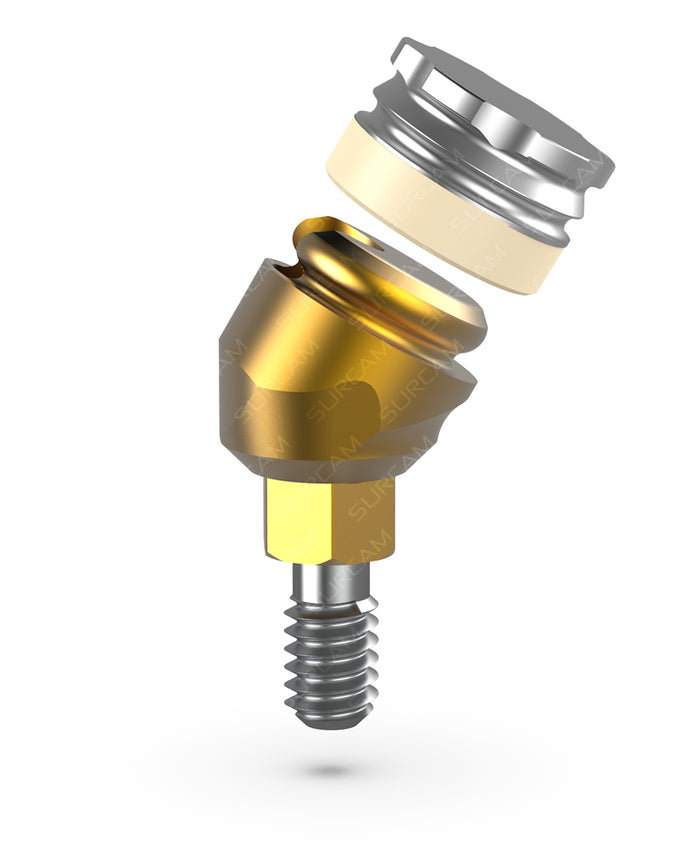
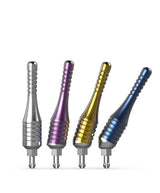
A low-profile stud abutment with a replaceable PEEK cap. A good fit when vertical space is limited. Wise-Lock is Surcam's own design, with a separate prosthetic screw and angled abutments at 9°, 18°, 30° and 45°.
When to consider an implant overdenture
Implant overdentures suit fully edentulous patients who struggle with conventional dentures, especially when cost, hygiene access or limited bone make a fixed full-arch bridge less suitable. They can also be a step toward a fixed prosthesis later.
Implant overdenture parts checklist
- Implant – internal hex connection
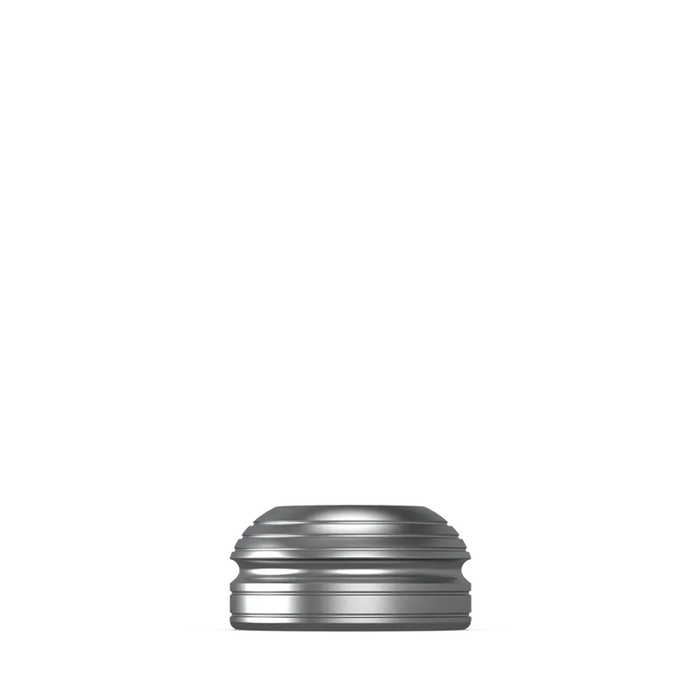
- Overdenture abutment – ball attachment or Wise-Lock, chosen by height and angle
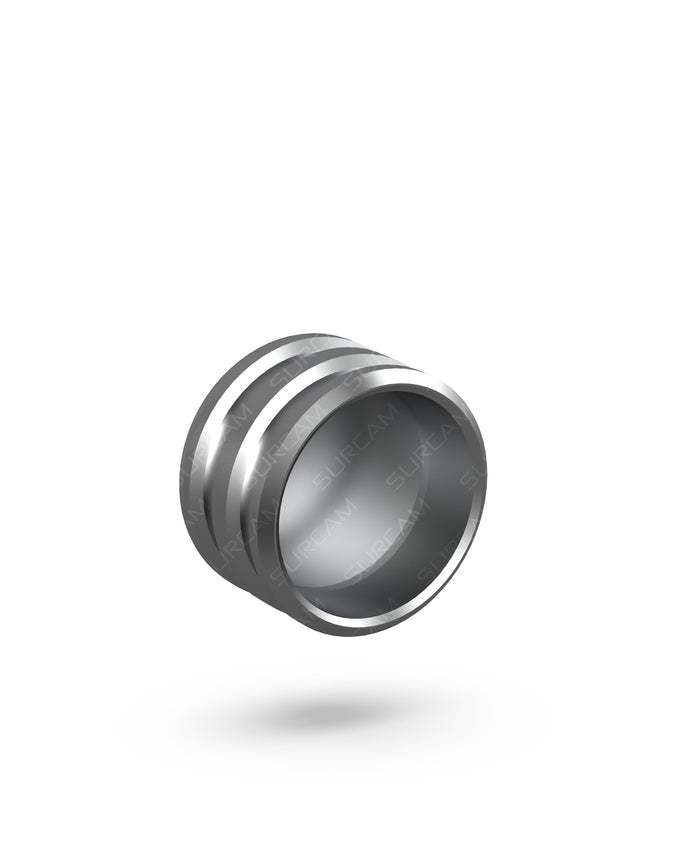
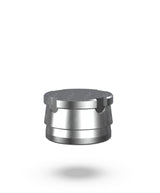
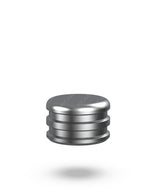
- Housing and retention cap – sets the retention level in the denture
- Impression coping and analog – carry the abutment position to the lab
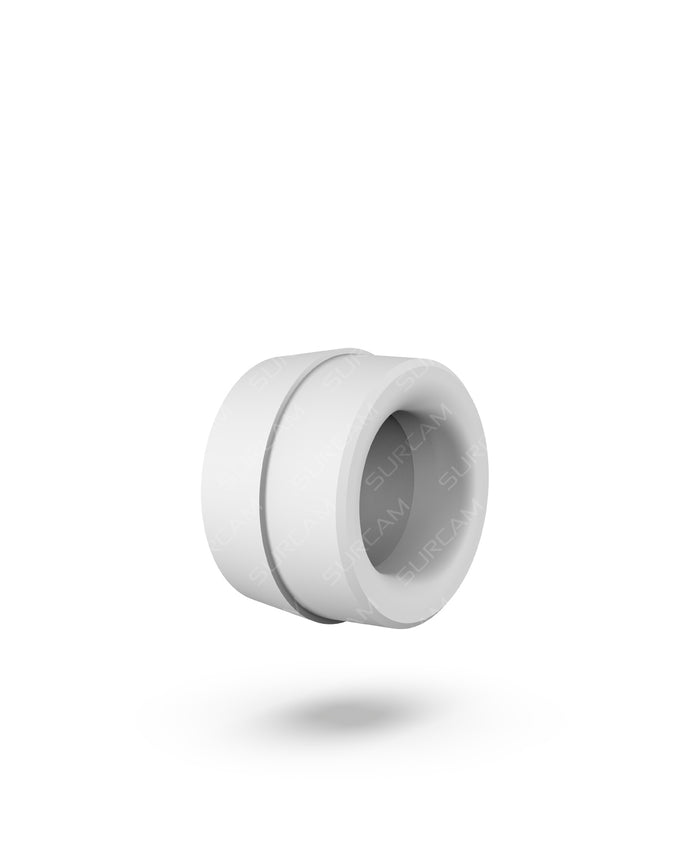
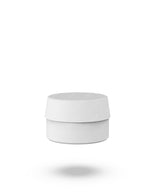
- Laboratory caps – used while processing the denture
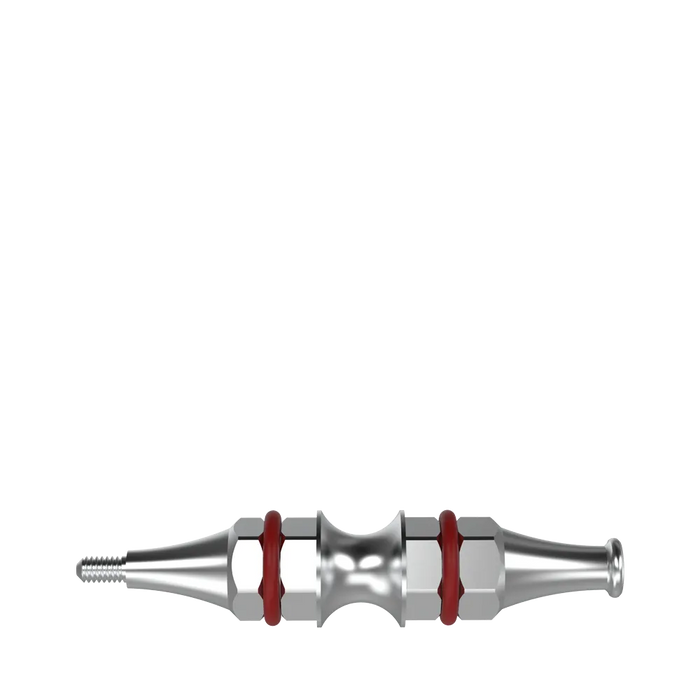
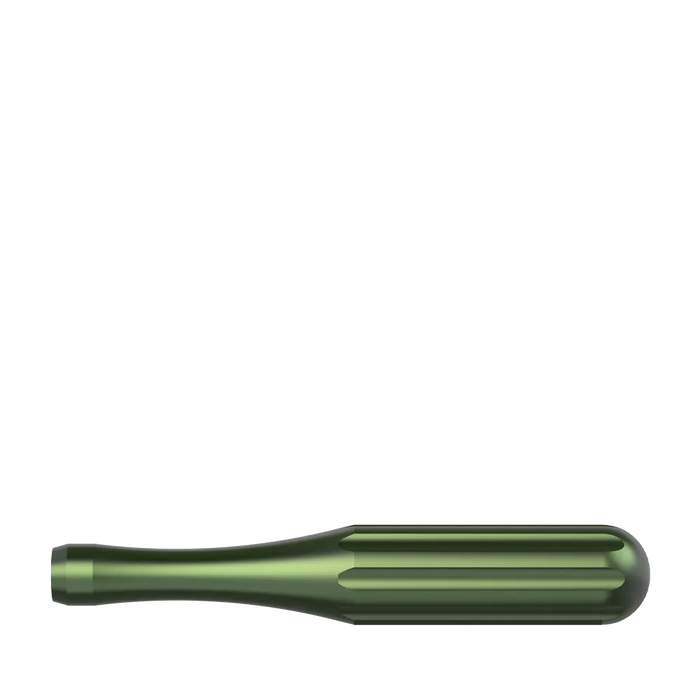
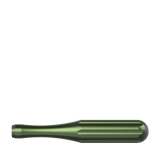
- Drivers and tools – seat the abutments and change caps
Maintenance
Retention caps wear with normal use and should be replaced periodically. Check that the abutments are tight and the tissue is healthy at each recall visit.