Bone levelInternal HexagonSP
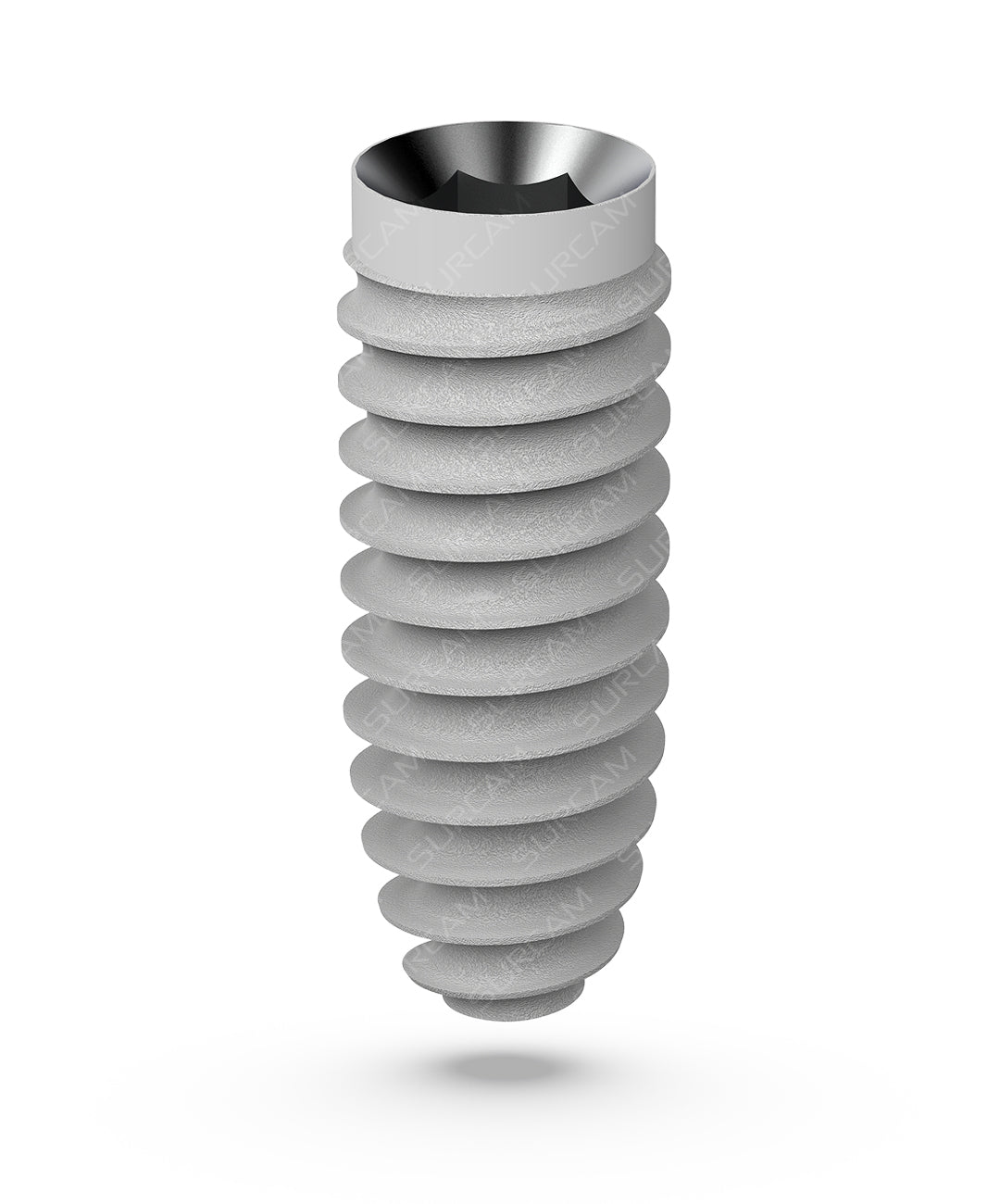
U-Type Dental Implant
- Diameter
- Ø3.8 to 5.0
- Length
- 6 to 22 mm
- Connection
- Internal Hexagon (SP)
- SKUs
- 21
Select diameter × length
Tap a cell to add · tap again for +1Internal Hex 2.43 pathway
From placement to restoration, one connection
Every part below shares the Internal Hex 2.43 connection.
-
1PlaceU-Type Dental Implant Internal Hex Dental Implants You are here
-
2Heal
Healing caps 5 parts · from $14(opens in a new tab)


-
3Record
Transfers & analogs 25 parts · from $9Open and closed tray(opens in a new tab)


-
4Restore
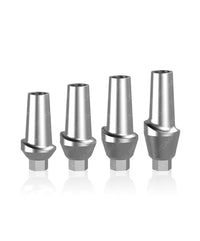
Cemented abutments 21 parts · from $15Straight and angled(opens in a new tab)


-
5Digital
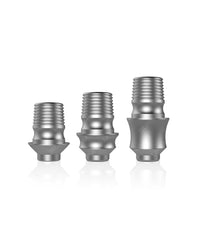
Ti-Base CAD/CAM 8 parts · from $20Scan bodies and Ti-bases(opens in a new tab)


-
6Full arch
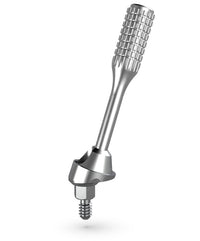
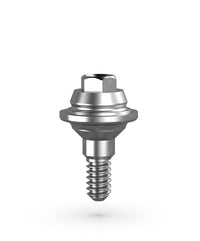
Multi-unit 17 parts · from $15Straight, 17°, 30°, 45°(opens in a new tab)



Overview
The U-Type Dental Implant (Universal System) is Surcam’s most advanced design, engineered for maximum primary stability in all bone densities (D1–D4). Designed for clinicians seeking consistency, control, and performance, the U-Type system delivers reliable results in both routine and complex cases.
A deep, knife-edge thread geometry and tapered body enable active bone condensation during insertion, resulting in high insertion torque and strong mechanical anchorage, even in soft or compromised bone.
The implant’s macro design is enhanced by a precision-engineered SLA (Sandblasted, Large grit, Acid-etched) surface that promotes rapid bone cell attachment and accelerated osseointegration, supporting immediate and early loading protocols.
The U stands for Universal, reflecting a system designed for consistent performance across indications, bone qualities, and clinical workflows. The U-Type implant maintains stability, control, and predictability in both dense cortical bone (D1) and low-density cancellous bone (D4).
The system offers a simplified, efficient surgical protocol that enables faster procedures and reduces chair time while maintaining clinical accuracy and outcomes.
Key Features
-
Universal implant system (D1–D4 bone compatibility)
-
Maximum primary stability through aggressive knife-thread design
-
Tapered body with self-cutting threads for bone condensation
-
Internal Hex connection for prosthetic versatility
-
SLA surface treatment for enhanced osseointegration
-
Optimized for immediate placement and loading
-
Streamlined surgical protocol for efficiency and precision
-
Manufactured from Titanium Grade 5 (Ti-6Al-4V)
Clinical Performance Highlights
Maximum Primary Stability in All Bone Types
Deep, aggressive threads condense bone during insertion to achieve high insertion torque and stability, even in D3–D4 bone.
Tapered Body with Self-Cutting Threads
Provides controlled insertion, optimal bone engagement, and strong mechanical anchorage in all bone densities.
Simplified Surgical Workflow
A reduced drilling sequence allows for faster, more efficient procedures while maintaining surgical precision.
Enhanced Osseointegration
The SLA surface promotes rapid bone healing and strong bone-to-implant contact, making it ideal for immediate loading cases.
Specifications
| Implant Type | U-Type (Universal) |
|---|---|
| Connection | Internal Hex |
| Material | Titanium Grade 5 (Ti-6Al-4V) |
| Surface | SLA (Sandblasted & Acid-Etched) |
| Body Design | Tapered |
| Thread Design | Aggressive Knife-Edge |
| Indications | D1–D4 bone, immediate placement, immediate loading |
| Implant platform | Standard Platform (SP) |
| Compatible systems | Alpha-Bio®, BioHorizons®, Implant Direct®, MIS®, Zimmer Biomet® |
| SKUs | 21 |
Verify platform and indexing against your system before use. Follow the IFU for torque and loading.
Technical sheets
Catalog pages, size charts and drilling protocols
Catalog2
Size charts
Drilling protocols3
Is this implant suitable for narrow ridges?
Yes. The compressive macrogeometry is intended for conservative osteotomies and narrow ridges, enhancing primary stability via bone condensation. Final indication is case-dependent per IFU.
Can I immediately load this one-piece implant?
Immediate or early loading is possible only when primary stability (e.g., torque/ISQ) and occlusal control meet the Instructions for Use (IFU).
How much can I bend the neck and how?
Up to 30° using the recommended bending tools. Avoid repeated bends and do not exceed the limits stated in the IFU.
What prosthetic workflow is used for one-piece implants?
One-piece designs are commonly finished as prep-and-cement restorations (or other indicated prostheses). Follow your restorative protocol and cementation best practices.
What drilling protocol should I follow?
Use a minimal/under-preparation sequence to promote bone condensation. Follow the manufacturer’s IFU for speeds, irrigation, and any tapping; do not exceed torque limits.